

External Load Balancer (Default)
Environments are accessible over the internet through Google Cloud’s global load balancer. This is the simpler configuration. No additional networking infrastructure is required beyond a standard VPC subnet.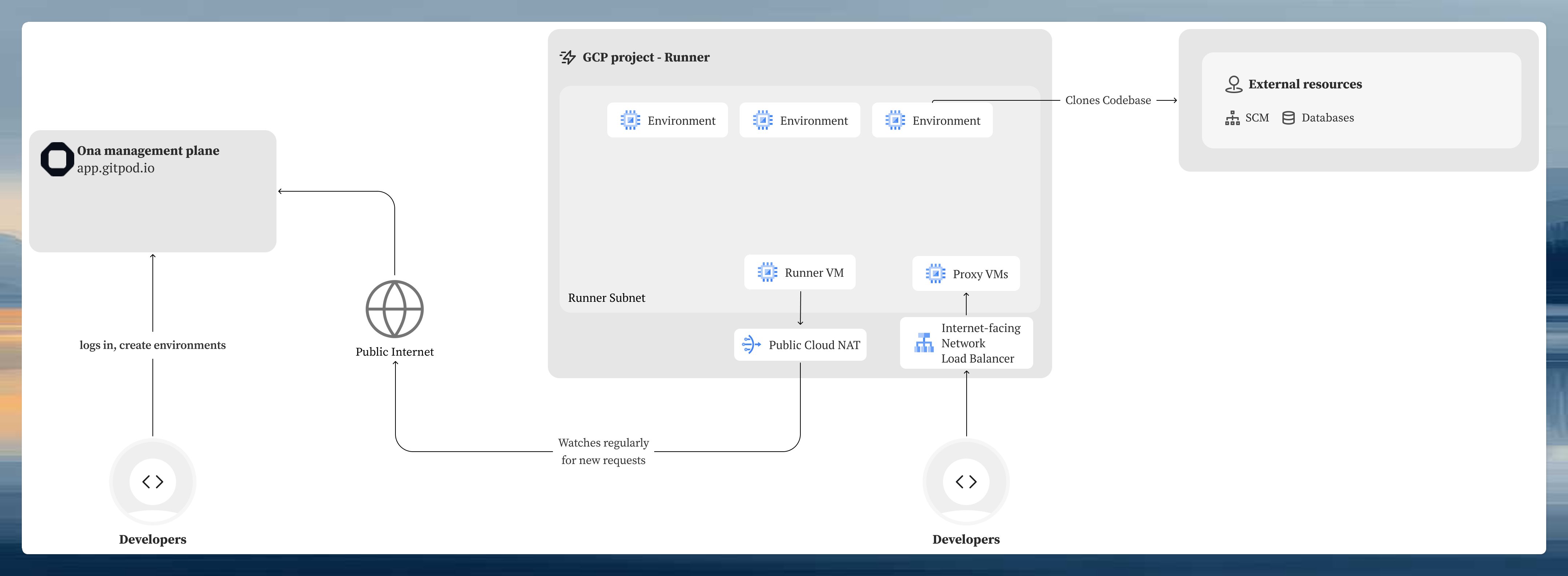
Subnet requirements
If the runner subnet does not have external internet access, enable Private Google Access so VMs can reach GCP services through Google’s internal network.
SSL/TLS certificate
- Store your certificate in Google Certificate Manager
- The certificate must include both the root domain and wildcard as Subject Alternative Names (SANs):
yourdomain.com*.yourdomain.com
- Managed certificates or uploaded certificates are both supported
- Reference format:
projects/{project}/locations/global/certificates/{name}
Internal Load Balancer
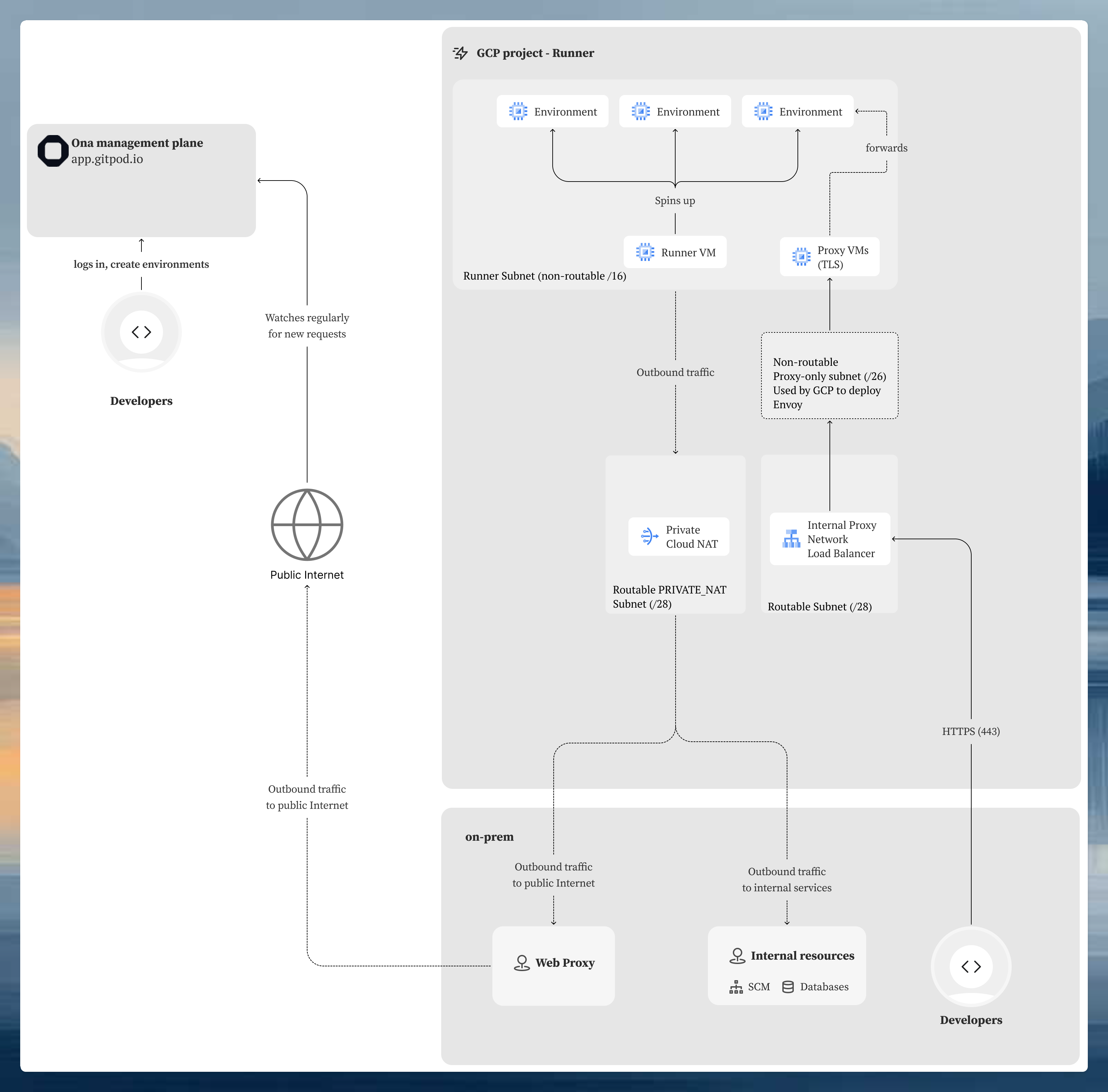
All traffic stays within your VPC and corporate network. Environments are not accessible from the internet. This mode requires corporate network connectivity (VPN, Interconnect, etc.) to your GCP VPC. The architecture differs from the external mode because GCP’s internal passthrough Network Load Balancer does not support TLS termination. TLS is instead terminated inside the Ona proxy component, which is why the certificate must be stored in Secret Manager (accessible to the proxy) rather than Certificate Manager. This also requires additional subnets:- Proxy subnet: GCP provisions its own Envoy-based proxy infrastructure in this subnet to route traffic to the internal load balancer. This is a GCP requirement for regional managed proxies.
-
Routable subnet: provides a routable IP address for the internal load balancer endpoint, reachable from your corporate network via VPN or Interconnect.
Subnet requirements
The internal load balancer requires three subnets:
Additional subnet requirements:
- The proxy subnet must have its purpose set to
REGIONAL_MANAGED_PROXY - The routable subnet must have routes from your internal/on-premises network
- If the runner subnet lacks external internet access, enable Private Google Access
SSL/TLS certificate
- Store your certificate in Google Secret Manager as a JSON object containing both the certificate and private key
- The certificate must include both SANs:
yourdomain.comand*.yourdomain.com - Reference format:
projects/{project}/secrets/{secret-name} - See Setup: Internal Load Balancer for the expected secret JSON format
Additional requirements
- Corporate network connectivity to your GCP VPC (VPN, Interconnect, or similar)
- DNS resolution from your corporate network for the runner domain
- The proxy subnet and routable subnet must exist before running
terraform apply
Outbound connectivity
The runner and environment VMs need outbound internet access to reach the Ona management plane, container registries, IDE downloads, and other external services. See Access Requirements: Network Connectivity for the full list of required endpoints. How you provide this access depends on your network architecture:If your VPC has no default internet route and you’re not using Cloud NAT or a proxy, VMs will fail to pull container images, download IDE components, or connect to the Ona management plane. Ensure at least one egress path is configured before deployment.
Next steps
- Setup guide: deploy your GCP Runner with Terraform
- Access Requirements: IAM permissions and network connectivity requirements
- Troubleshooting: diagnose load balancer and networking issues